"The Chronic" by Dr. Dre
The Game-Changers series continues by examining an LP that changed hip-hop forever by setting the template for the West Coast sound.
👉 Stream the album on your favorite platform
There’s a compelling argument to be made that Death Row Records peaked in February 1996.
In an image that evokes modern Hollywood gangster lore, Dr. Dre appeared on the cover of VIBE magazine alongside fellow label stars Snoop Dogg and Tupac Shakur, their three heads floating above that of Death Row mogul Suge Knight. At the time, Knight in particular has pushed the East-West beef to a near-breaking point. Among other things, he’d dissed Puff Daddy at the Source Awards the previous August and posted a $1.4 million bond to spring Shakur from Rikers Island two months later before signing him to a controversial handwritten record deal. The accompanying cover story from VIBE even cites a West L.A. shoeshine man who describes Knight as “the wrong n to f*** with.”
But, though Suge may have been grabbing headlines with his mafia don-esque persona, it was Dr. Dre who was the real creative force driving Death Row, so much so that he’d guided the label to a valuation north of $100 million in 1995. In a decade-long span leading up to that point, a run that’d begun with N.W.A and Ruthless Records, Dre had amassed 15 million in album sales and, despite plenty of industry skepticism surrounding Death Row’s viability, had staked his claim as hip-hop’s most sought-after hitmaker. Less than a month after the VIBE cover issue hit newsstands, Dre had jumped ship to start Aftermath Entertainment for Interscope. His old label would crumble shortly thereafter.
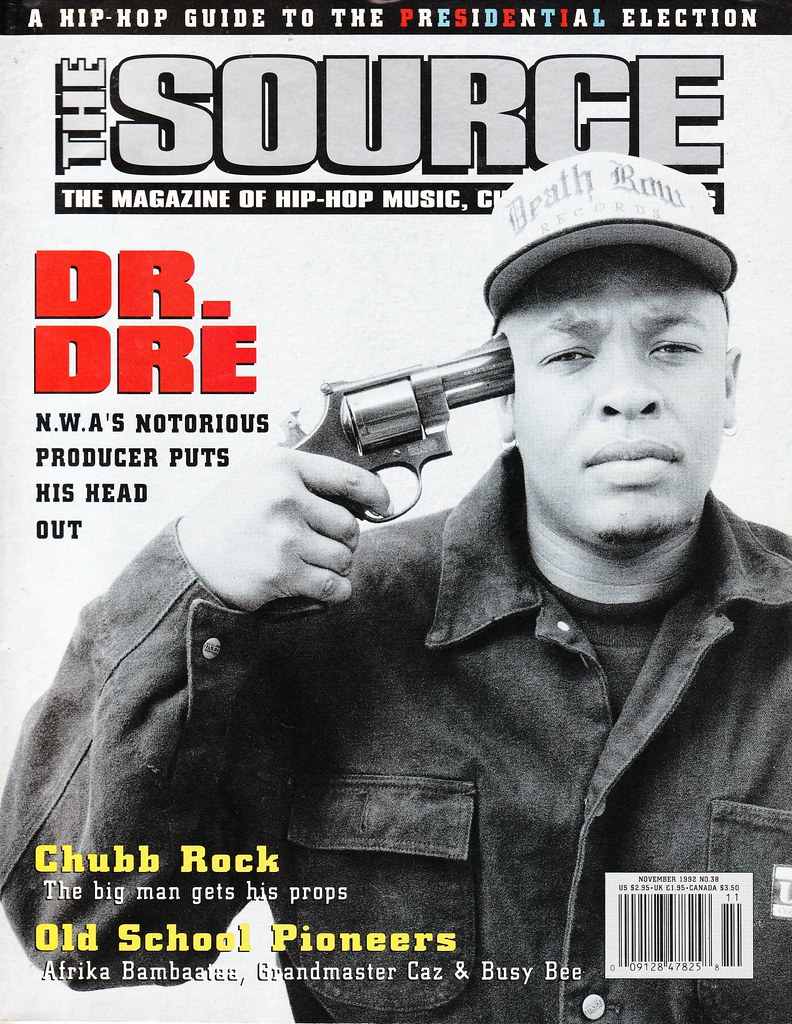
All that said, if you wind the clocks back even further, you’ll find that Death Row’s true Big Bang moment occurred in the last gasps of 1992 when The Chronic hit record store shelves. On top of being one of the genre’s first crossover blockbusters, selling 3 million copies in less than a year, it also brought a completely new sound to hip-hop’s foreground, establishing G-funk as a musical brand the West Coast has proudly worn as a badge of honor ever since. I don’t think it’s a stretch to say that, with The Chronic, there’s no Doggystyle or All Eyez on Me, nor would you have artists like Warren G, The Game, YG, Nipsey Hussle, and even Kendrick Lamar building entire careers and personas on top of thick beats and smooth, endlessly catchy hooks.
Everything here is free and stays that way. If a review sent you to a record you love, you can buy me a coffee.
Buy me a coffeeTo understand G-funk sonically, one must circle back to George Clinton, Parliament-Funkadelic, and what made the P-funk stylings of the 1970s so irresistible. The bass-heavy production and the iconic samples stand out as key ingredients but often overlooked are the live instrumentation and pitched-up synths that combine to give G-funk its relaxed, organic feel. It’s both nostalgic and futuristic, of its moment and utterly timeless. It’s music that’s perfect as a backdrop for kicking back and enjoying the album’s titular herbal supplement or as a tool for getting a sweaty nightclub dancefloor to the point of ecstasy. More than 30 years on, every song has become part of rap’s quintessential canon, often imitated but rarely equaled.
Historically, The Chronic and the birth of G-funk was the moment when West Coast hip-hop consciously uncoupled with its New York City forefathers and began to foster its own singular identity. A record like Straight Outta Compton may have been the first flag planted in gangsta rap’s soon-to-be fertile ground, but the group also relied heavily on East Coast samples to solidify their instrumentals. Ditto for AmeriKKKa’s Most Wanted, Ice Cube’s first solo effort, which was emboldened by The Bomb Squad, Long Island natives best known for their work with Public Enemy. For the first time in hip-hop history, songs like “Nuthin’ but a G Thang” and “Let Me Ride” sounded like they belonged in California, blaring out of sound systems encased in low riders glinting in the South Central sun.
All these transformative touchstones, and we haven’t even talked about this album’s undeniable ace in the hole: Snoop Dogg. An unknown teenager from Long Beach with the kind of laid-back voice that cozied up to Dre’s brand of blunted funk so perfectly, Snoop appears on nearly every track on The Chronic, making this a stone’s throw away from a straight-up collar project. And, while his name isn’t above the title here, his presence during the recording sessions was a near-constant. “I was whoopin’ ns!”Snoop recalled in 2019. “They would be going home to go get chicken, I’d be in that motherfer all night. If Dre even had half of a beat or had the drums, I’d write some s to the drums and come up with a melody. Before you know it, I’m on a song.” In all, Snoop has a co-writing credit on all but three of the album’s tracks, helping Dre pen some of its leanest and meanest offerings, such as “The Day the N* Took Over,” “Lil’ Ghetto Boy,” and “A N* Wit’ a Gun.”
It often goes unnoticed under the sheer brawn of its G-funk attack, but The Chronic also boasts unflinching politicized lyrics, making no small mention of the ugly political winds blowing through California and, more specifically, Los Angeles. Earlier that same year, the city was literally ablaze with unrest following the acquittal of the LAPD officers who savagely beat Rodney King. It’s also worth mentioning that the Chief of Police at the time, Daryl Gates, is on record as saying drug dealers “ought to be taken out and shot.” Why? Because “we’re in a war,” he added. To hear the weary sense of inevitability that laces Dre’s anger on this record is to understand how little has changed in America. From Ferguson, Missouri to George Floyd to Breonna Taylor and on and on and on—if anything, this record’s ferocity sounds as contemporary and as urgent as it did in 1992, but more entirely different reasons.
Violent outbursts in response to perceived injustices are part of the Dr. Dre ethos, for better and for worse. His multiple run-ins with police over the years include incidents of physical assaults on women, including media personality Dee Barnes and his ex-wife Nicole Young, the latter of whom claimed Dre “held a gun to my head” on more than one occasion. Though he later apologized to his victims, the hip-hop community didn’t (and likely still doesn’t) exactly turn away from his violent persona. Not only did a sanitized depiction of the Barnes assault (or at least one that excuses Dr. Dre’s actions) nearly make it into the hit Straight Outta Compton film, but a 1991 Rolling Stone profile positions the producer as the opposite of remorseful. When pressed about the incident, he said: “People talk all this s***, but you know, somebody fs with me, I’m gonna f with them. I just did it, you know. Ain’t nothing you can do now by talking about it. Besides, it ain’t no big thing – I just threw her through a door.”
The Chronic’s commercial success ensured this type of violent image remained central to gangsta rap’s appeal, particularly (and ironically) for white suburbanites who gobbled up each morsel without giving the long-term mythmaking a second thought. Though it’s beyond the scope of this essay, rap’s glorification of violence is, in many ways, a symptom of the environment that continues to breed much of its subject matter. As Uzochi P. Nwoko notes in this excellent Harvard Crimson piece, some emcees believe “the only way to generate revenue is to produce what people want to hear,” which means feeding the larger-than-life personas facilitated by a complex history and persisting racist stereotypes.
He continues:
Rappers don’t necessarily intend to set a poor example for America’s youth—they are simply trying to do what it takes to earn money, just as any other professional does. Moreover, many rappers come from impoverished neighborhoods and realize that, if they don’t seize the opportunity to make music that sells while they have the chance, they may never get another shot.
Amid all its baggage, The Chronic is an exhilarating and inextricable part of rap’s DNA. It catapulted its central figure, along with five or six other industry mainstays, to superstardom, birthing an entire G-funk ecosystem in the process. It helped the West Coast scene form a new identity as others were sliding into oblivion, like parts of the City of Angels plummeting into the depths of the Pacific. And, even compared to its spiritual sequel—1999’s booming crowdpleaser 2001—there’s still an irreplaceable pleasure in revisiting Dre’s true calling card. It’s akin to watching a talented chef expertly prepare a table-side meal seemingly out of thin air. No matter how familiar you think you are with its ingredients or its origins, the moment those first bars of “F*** Wit Dre Day” hit your sonic palette, it sounds as exciting as when you first tasted it. That sensation on your aural palette is pure transcendence.